VIBE
Your passport to nightlife.
The Problem
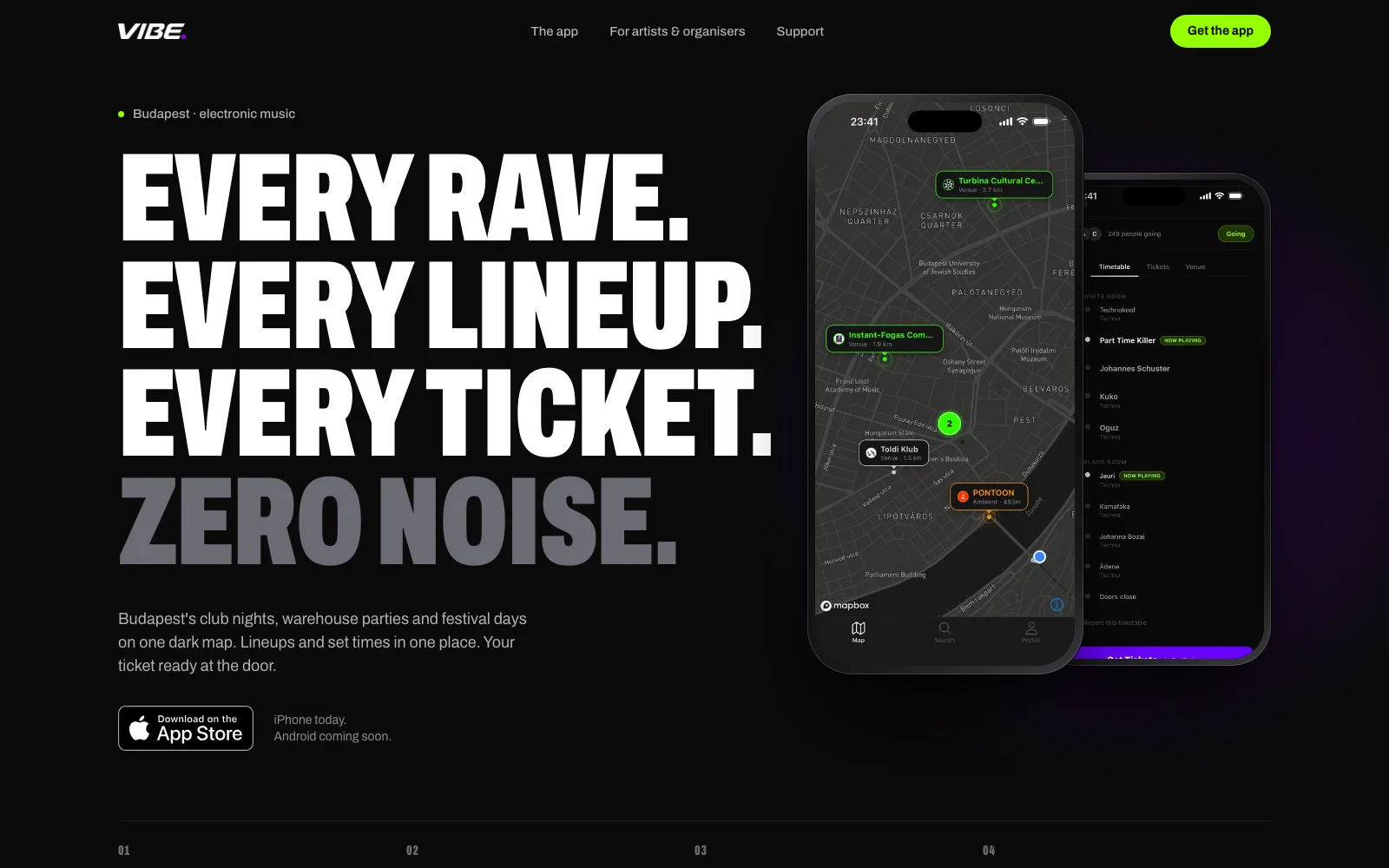
Budapest electronic nightlife discovery is fragmented across Instagram, Facebook Events, ticket pages, and chats. Fans — primarily local scene regulars around 20–35 — need one trustworthy place for what's on, where, lineup, and price path — not another nearest-venue map. They also need trust signals after nights out. VIBE positions as a personal nightlife OS: discovery, scene graph, and ratings, without becoming a primary ticket vendor.
Our Approach
Solo technical build as co-founder inside Flintworks Studio: a React Native/Expo app, a custom Express/Postgres API, an admin panel, and a scraper worker that imports events from Oneticket, Cooltix and Resident Advisor. Product thesis: win on catalog completeness, lineups and ratings; send people to the ticket sellers and keep their tickets in an offline wallet — never sell tickets ourselves.
Architecture
Mobile: Expo/React Native, Expo Router, Mapbox map with clustering, Apple/Google/Facebook and email sign-in, PostHog analytics, Expo push notifications.
API: Express 5, PostgreSQL (65 migrations), Zod validation, JWT auth, role-aware surfaces for users, artists, organisers and platform admins.
Jobs: Redis + BullMQ worker for scheduled ticket refresh, ratings recalculation and rating-prompt pushes.
Ingestion: a scraper worker pulls events from Oneticket, Cooltix and Resident Advisor; each new flyer gets one Gemini vision pass to fill in structured fields.
Ratings: one short post-event flow, open only to attendees verified by a wallet ticket or by being at the venue during the event.
Ops: GitHub Actions deploys the API, worker, admin panel and scraper, with health-checked restarts on a VPS; 179 test files across server, scraper and app.
The Challenge
Keep a Budapest nightlife catalog complete and fresh while inferring missing structure with AI — especially from flyers — without runaway inference cost. Separately: set times often arrive late; artists lack clean genre tags; ratings only matter if they're trustworthy and quick.
How We Solved It
- 1
Scrape three ticketing sources automatically, and run Gemini only on new events' flyers — known URLs just refresh their ticket offers.
- 2
Lock scheduled jobs to zero paid AI calls, and give artist genre inference a 9-month cooldown after an early cost spike.
- 3
Let the community upload a lineup screenshot: AI extracts set times by room, and nothing is saved until the user confirms.
- 4
Infer artist genres from a fixed allowlist, at most five per artist, so discovery filters stay clean.
- 5
Gate ratings to verified attendance — a wallet ticket, or being at the venue during the event — and keep the flow to four quick steps: entry, vibe, lineup, confirm.
Key Features
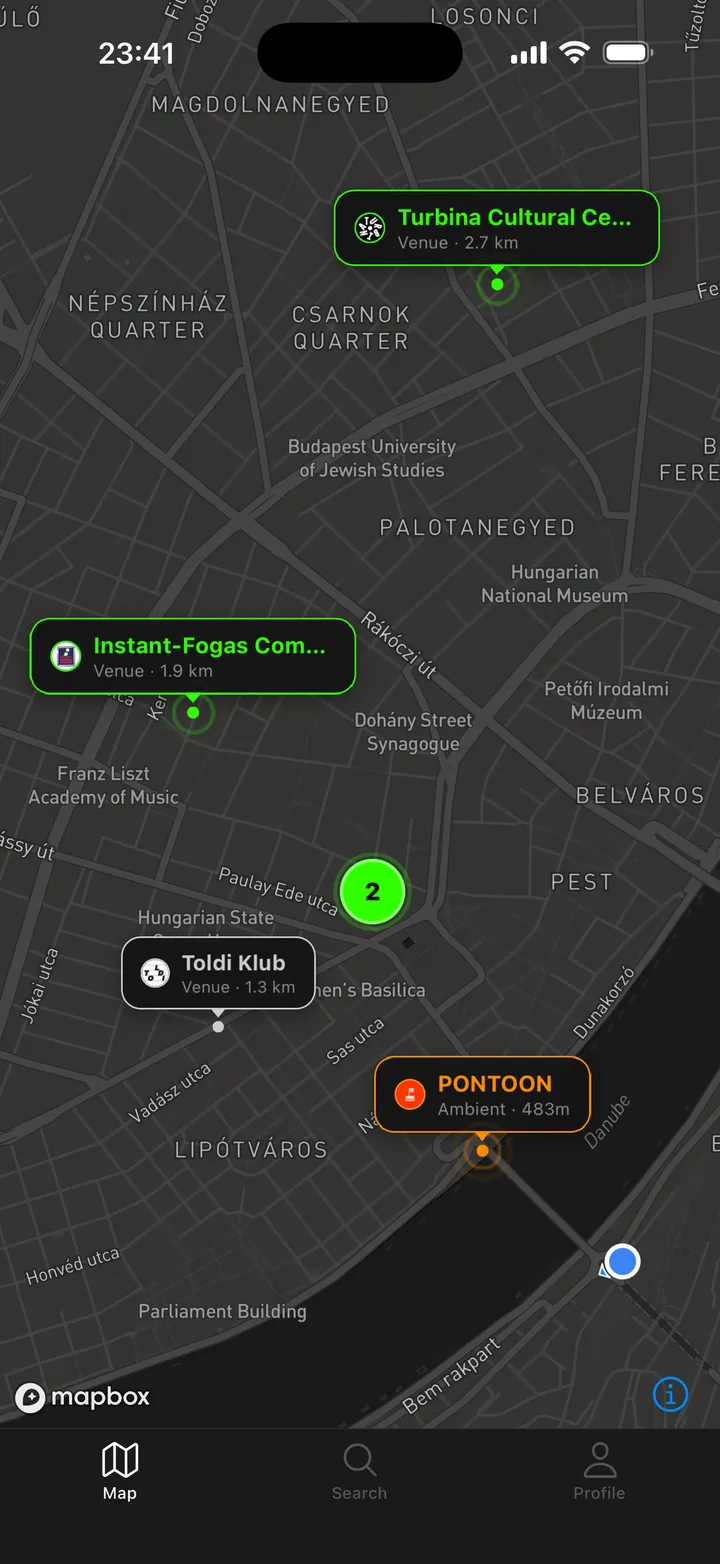
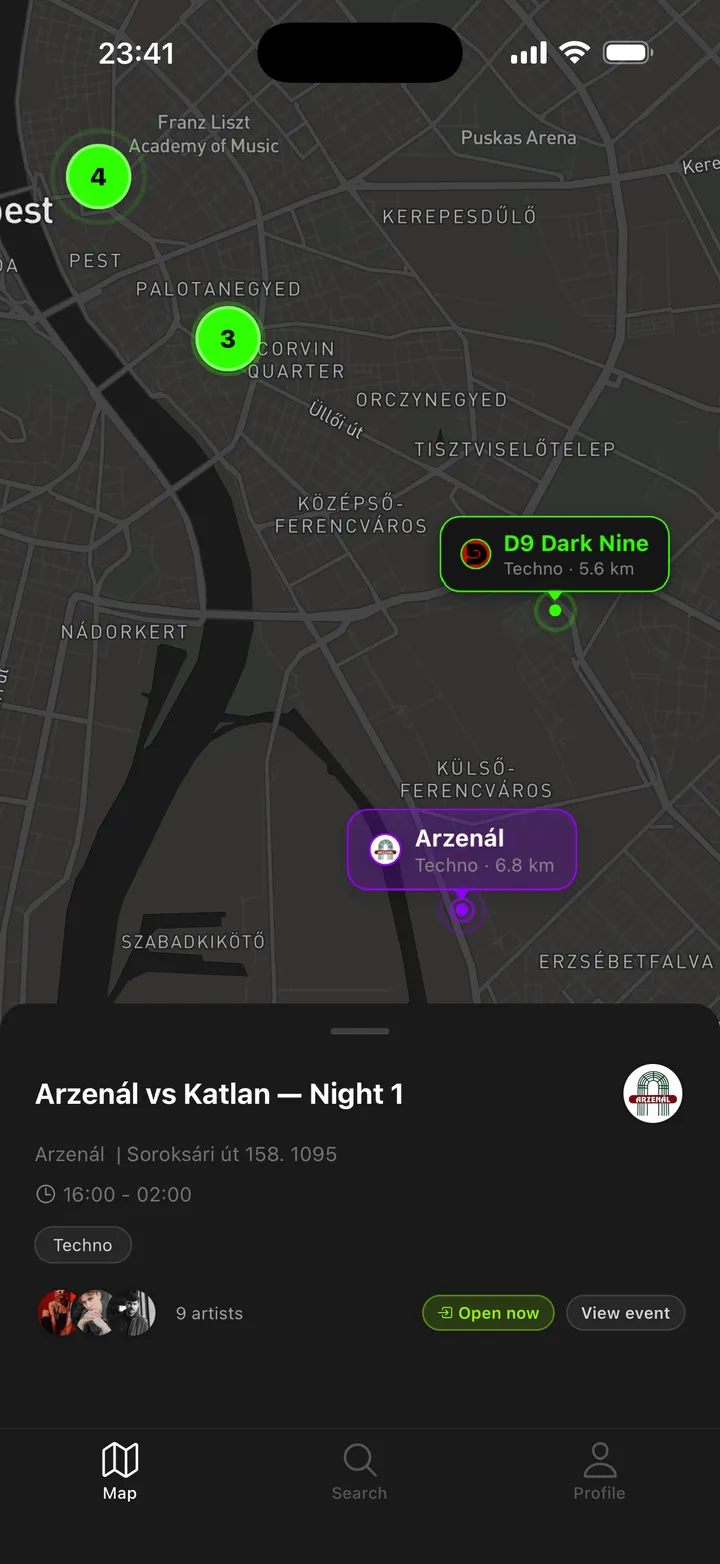
Map-first Budapest discovery — what's on, where, and what's open now
Automated event import from three ticketing sources, with AI flyer reading
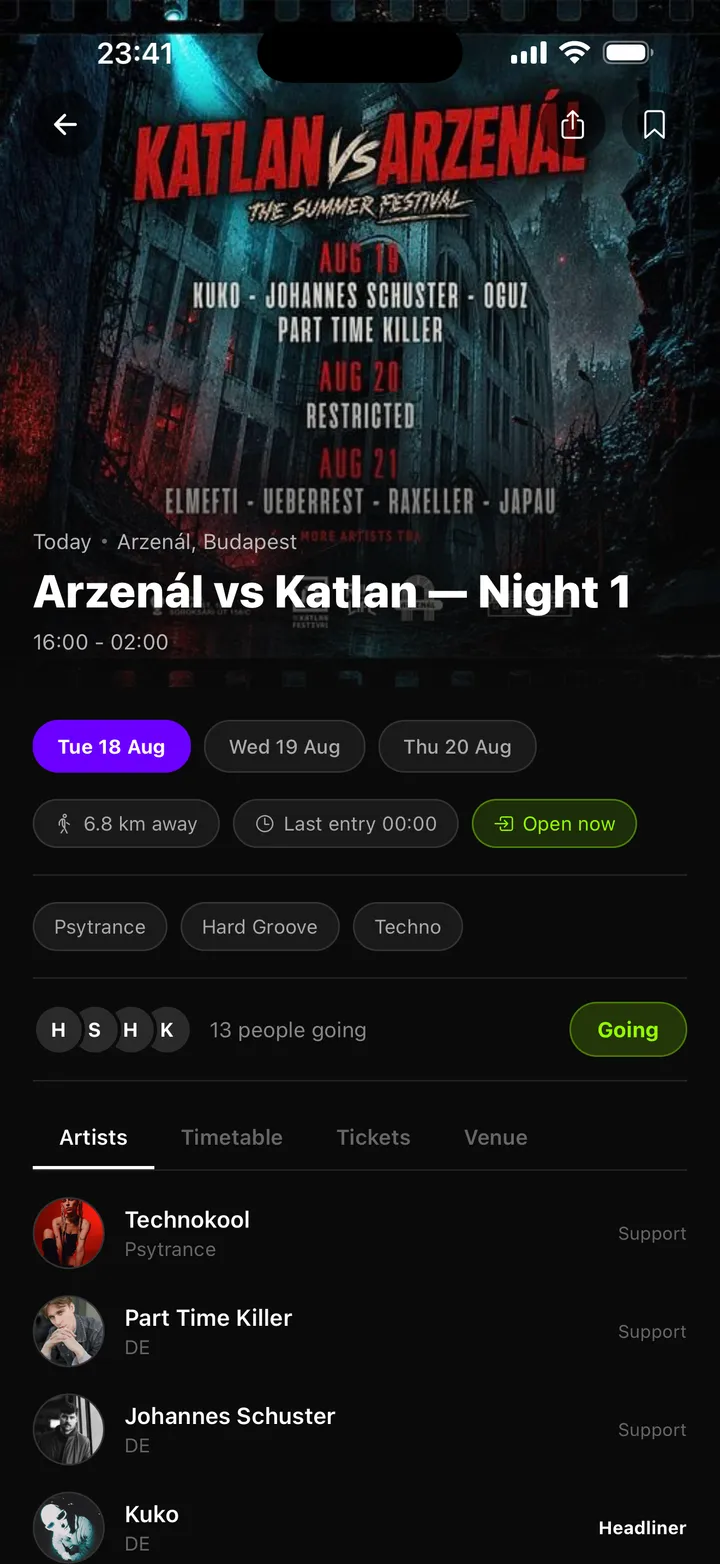
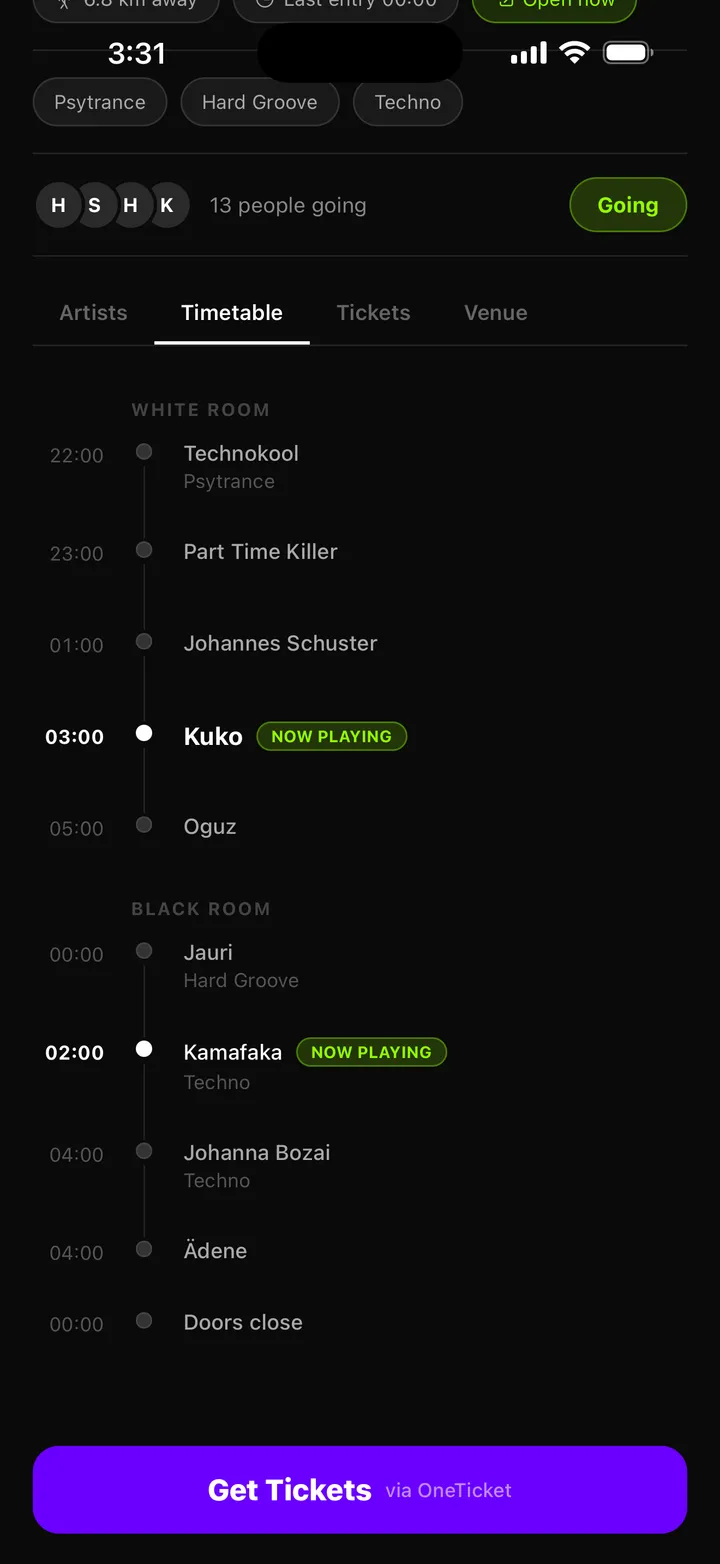
Room-by-room timetables with “now playing”, including multi-day festivals
Ratings from verified attendees for events, artists and venue vibe
Offline ticket wallet — share a ticket PDF in, the QR code is ready at the door
Community lineup AI — set times from a single screenshot
Tech Stack
Frontend
Backend
Infra
Integrations
Impact
339
events in the catalog, imported from 3 sources
132
ratings from verified attendees
25/33
verified attendances that ended in a rating
3
months from first commit to the App Store
Figures as of September 2026.
Product
Want something like this built?
Back to Studio